Written by the Klamer Family Dentistry team · Published 2026-08-13
You can protect your teeth by wearing a custom nightguard, lowering stress before bed, and cutting back on caffeine and alcohol at night. A nightguard helps most when you're clenching or grinding hard enough to wear down teeth, wake up sore, or crack fillings.
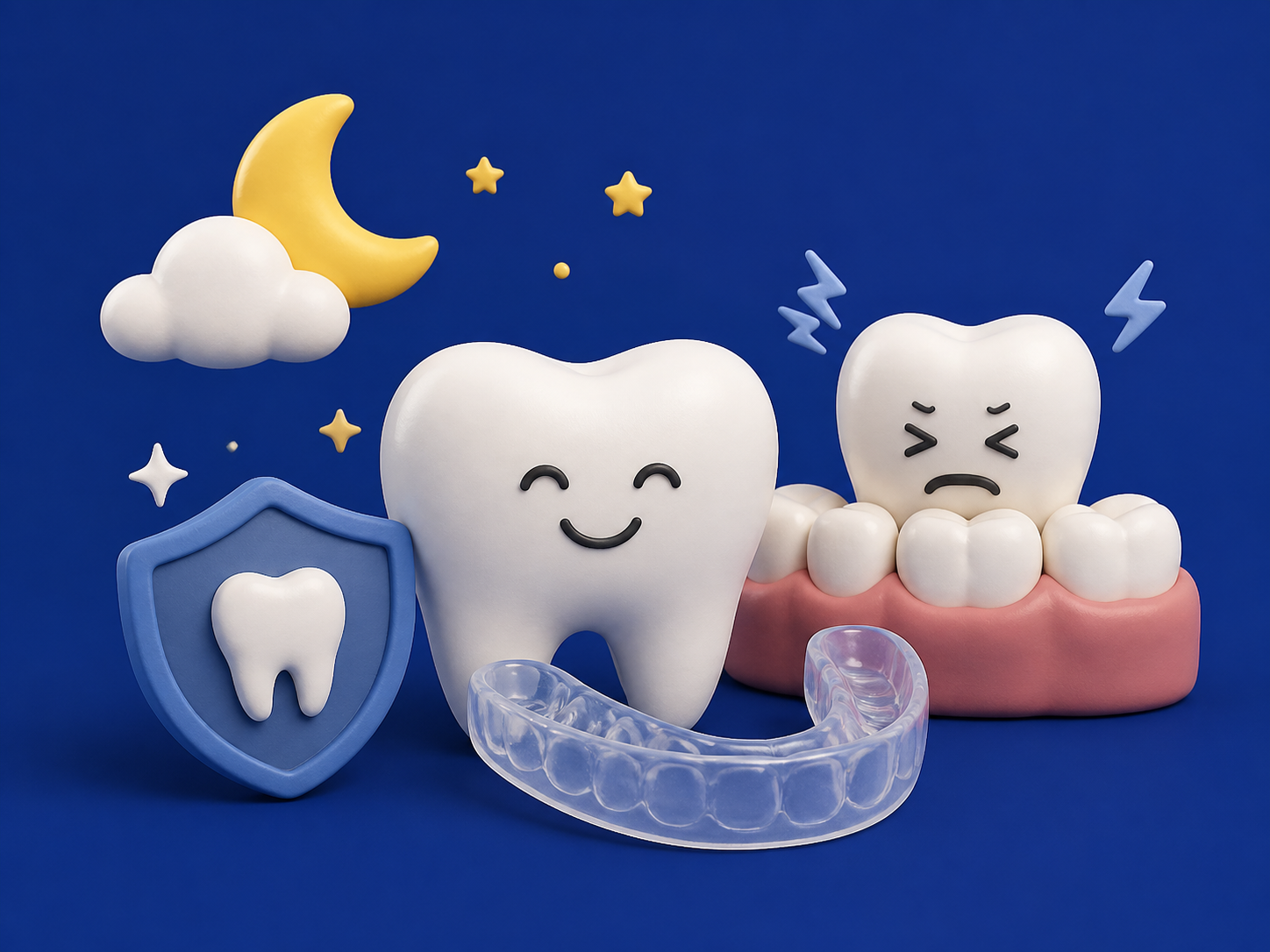
Grinding your teeth at night — dentists call it bruxism — often happens without you knowing it. Your jaw clenches while you sleep, and over months and years that pressure can flatten, chip, or crack teeth. The good news? A few simple habits and the right protection can save your smile a lot of wear.
What actually protects your teeth from grinding?
The single best defense is putting a barrier between your top and bottom teeth so they can't grind against each other. A few things help:
- A custom nightguard. This is a fitted piece you wear while you sleep. It absorbs the force instead of your enamel.
- Winding down before bed. Stress is a big trigger. A calmer evening routine often means a quieter jaw.
- Easing up on caffeine and alcohol at night. Both can make grinding worse.
- Staying aware during the day. If you catch yourself clenching, rest your tongue behind your top teeth and let your jaw hang loose.
How do you know if you grind your teeth?
Most people don't feel themselves doing it. Watch for these clues instead:
- A sore jaw or dull headache when you wake up
- Teeth that look flat, chipped, or worn on the edges
- Sensitivity that comes and goes
- A partner who hears grinding at night
If any of these sound familiar, mention it at your next visit. A quick look at your teeth usually tells the story.
When does a nightguard actually help?
A nightguard is worth it when grinding is doing real damage — worn enamel, cracked fillings, morning jaw pain, or teeth that keep getting sensitive. It won't stop you from clenching, but it takes the hit so your teeth don't have to.
Store-bought guards can help in a pinch, but they're bulky and rarely fit well, which makes people give up on them. A guard made from a mold of your own teeth fits snugly, lasts longer, and is far more comfortable to sleep in. That's part of what we handle under General Dentistry at Klamer Family Dentistry.
What if the jaw pain won't go away?
Sometimes grinding is tied to a jaw joint problem, not just habit. If you're dealing with clicking, locking, or ongoing jaw and facial pain, that's worth a closer look. We evaluate and treat these issues through our TMJ/TMD care, which goes beyond a guard to figure out what's driving the discomfort.
Protecting your teeth now is a lot easier than repairing worn or cracked ones later. If you think you're grinding, don't wait for the damage to show — get it checked.
Related questions
Can a nightguard stop me from grinding?
Not exactly. It won't stop the clenching itself, but it cushions the force so your teeth don't wear down or crack.
How long does a custom nightguard last?
With good care it can last several years, though heavy grinders may wear through one sooner. Bring it to checkups so we can see how it's holding up.
Is grinding in kids something to worry about?
Many children grind and grow out of it as their adult teeth come in. If it seems severe or persistent, ask about it during their visit.